
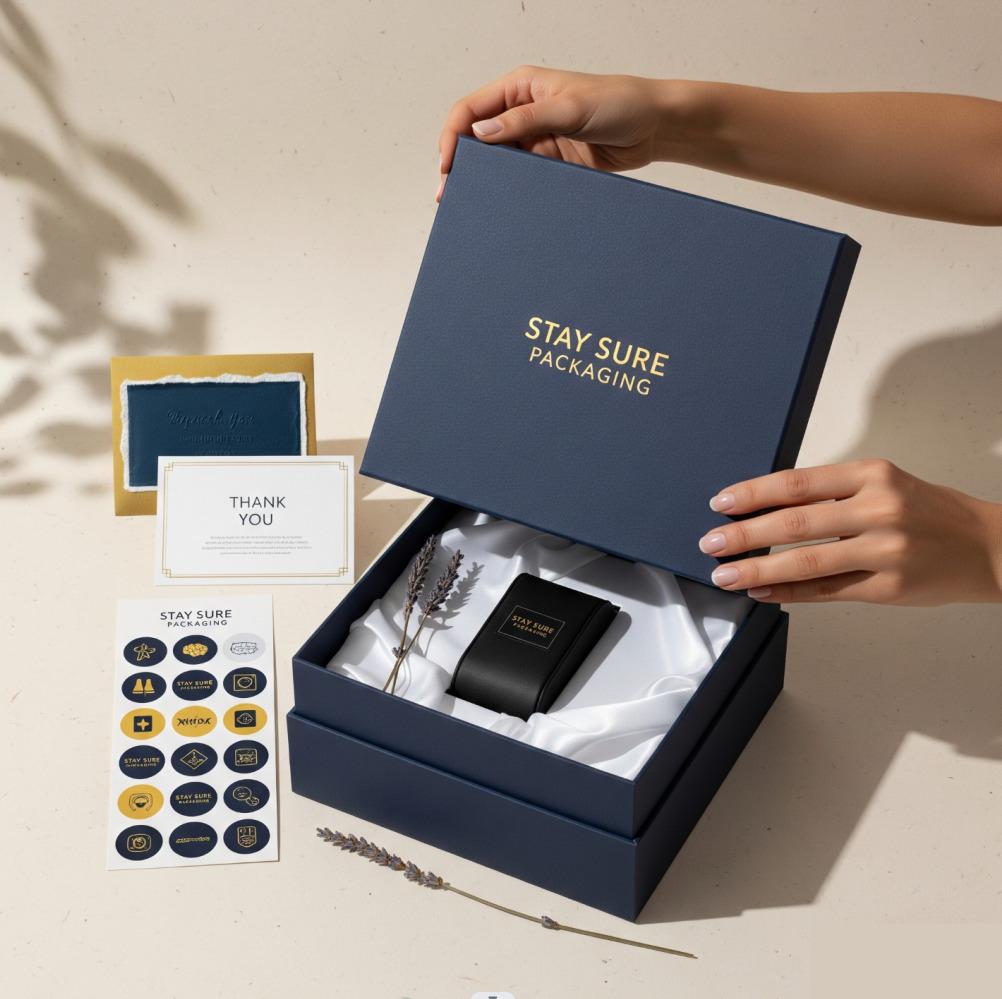

Online stores ship more fragile goods than ever. Bottled products need packaging that protects and speaks for the brand.
This guide covers market forces, materials, design, logistics, and how to test ideas before scaling.
Abstract
The current landscape mixes booming e-commerce and direct-to-consumer growth.
Key drivers include premiumization, supply chain shifts, and high unboxing expectations. Visit a supplier page for practical examples of packaging for bottle products to see what’s on offer.
Readers will gain tactics for design, sourcing, testing, and measuring ROI.
1. Market Landscape and Growth Drivers
E-commerce sales keep rising. Brands sell directly and cut middlemen.
Premium packaging tells a story and justifies higher prices.
Global supply chains shift regionally, affecting lead times and costs.
Consumers expect a memorable unboxing and damage-free delivery.
2. Materials, Sustainability, and Compliance
Cardboard and paper remain the primary materials for bottle boxes.
Bioplastics and compostable liners appear, but regional recycling varies.
Certifications such as FSC and PEFC help brands prove sustainable sourcing.
Lightweighting reduces shipping cost and carbon footprint.
Labels and sustainability claims must match regulations in each market.
3. Design Trends and Innovation in Bottle Boxes
Visual identity needs to read quickly on unboxing photos.
Custom inserts and compartments keep bottles steady and look premium.
Tamper-evident seals add consumer confidence for high-value liquids.
Child-resistant features are necessary for certain beverage categories.
Finishes like hot foil and soft-touch coatings make a tactile statement.
4. Customization Technologies and Production Methods
Digital printing allows short runs and fast changes with color fidelity.
Offset printing still wins on cost for large volumes and fine detail.
Variable data printing personalizes packs at scale for gifting and promos.
On-demand production cuts inventory and supports seasonal spikes.
Prototyping and 3D renderings speed visual validation before tooling.
5. Structural Engineering for Bottle Boxes
Choose box style by product and brand positioning: two-piece, drawer, sleeve.
Internal supports like molded pulp or honeycomb reduce movement.
Design for standard bottle sizes, then adapt for custom volumes.
Plan secondary packaging for bulk shipping and pallet stability.
6. E-Commerce Fulfillment and Logistics
Packaging affects shipping efficiency and warehouse throughput.
Smarter packing can lower dimensional weight charges.
Anti-counterfeit tags and QR codes verify authenticity.
Returns demand resilient packaging that survives repeated handling.
Connect packaging SKUs to ERP and fulfillment systems for accuracy.
7. Brand Marketing, Storytelling, and Customer Experience
Unboxing moments drive social shares and organic reach.
Personal notes or variable graphics create emotional connection.
Limited-edition packs boost urgency and seasonal sales.
Influencers amplify distinctive packaging with short videos and photos.
8. Sustainability and Lifecycle Assessment
Recyclability differs by region; test local waste streams first.
Provide clear end-of-life instructions to reduce contamination.
Take-back or refill programs close material loops over time.
Consider life-cycle cost, not only upfront price per box.
9. Case Studies and Industry Examples
Brand A redesigned wine packaging for a premium look and safer transit.
Brand B replaced plastics with 100% recyclableboard and cut waste.
Brand C offered personalized boxes for gifting and saw higher repeat buys.
10. Regulatory, Safety, and Quality Considerations
Beverage and food contact rules differ by country and product type.
Tamper-evidence and child-resistance standards sometimes mandate testing.
Quality testing includes compression, drop, and vibration protocols.
Labeling must match import and export rules to avoid delays.
11. Costing, ROI, and Procurement Strategies
Unit economics change with volume, material, and finishing choices.
Trade-offs exist between aesthetic features and protective performance.
Qualify suppliers with audits and sample runs before placing large orders.
Plan lead times for peak seasons to avoid rush premiums.
12. Implementation Roadmap for Brands
Start with a discovery session and a clear design brief.
Move to prototypes and small pilot runs to validate assumptions.
Scale gradually, using metrics from pilots to guide full rollout.
Iterate on design and printing based on returns and customer feedback.
13. Future Outlook and Emerging Technologies
AI can speed material selection and reduce prototyping cycles.
Biodegradable and closed-loop materials will improve with investment.
Smart packaging sensors can track temperature and shock in transit.
Virtual unboxing and meta-packaging concepts will appear more often.
14. Risks, Challenges, and Mitigation
Material shortages and freight spikes create supply risk.
Regulatory changes can invalidate packaging claims overnight.
Public scrutiny of environmental impact affects brand trust.
Protect unique structural designs with careful IP and documentation.
15. Practical Checklists and Best Practices
Design brief checklist: target audience, bottle specs, transit profile.
Material rubric: recyclability, certifications, cost, supplier lead times.
Production QA: sample tests, pilot batch inspection, packaging KPIs.
Shipping checklist: dimensional weight checks, pallet patterns, labeling.
References and Further Reading
Industry reports, material science resources, and supplier directories inform choices.
Look for standards from recycling councils and packaging associations.
Appendix
Glossary items include terms like crush strength, MD/CD, and CTL.
FAQ items and template briefs help brand managers speed procurement.
FAQs
What material works best for bottle boxes?
Corrugated board often balances protection and cost. Rigid board fits premium positioning. Choice depends on transit stress and sustainability goals.
How can I test a new bottle box design quickly?
Order short-run prototypes and run drop and compression tests. Use 3D renderings and virtual unboxing to catch visual issues first.
Are compostable liners better than recyclable liners?
Compostables suit regions with industrial composting. Recyclable liners perform better where curbside recycling exists. Match the choice to local waste infrastructure.
Can small brands afford custom packaging?
Short-run digital printing and simple structural designs lower minimums. Start with a pilot and scale as volume grows to keep costs manageable.
How do I reduce returns caused by damaged bottles?
Use tailored inserts and secure closure systems to limit movement. Test packaging with simulated transit conditions before full launch.
