


Time Savings with a Falanstools FALANS Tile Vibrating Paver for Big Jobs
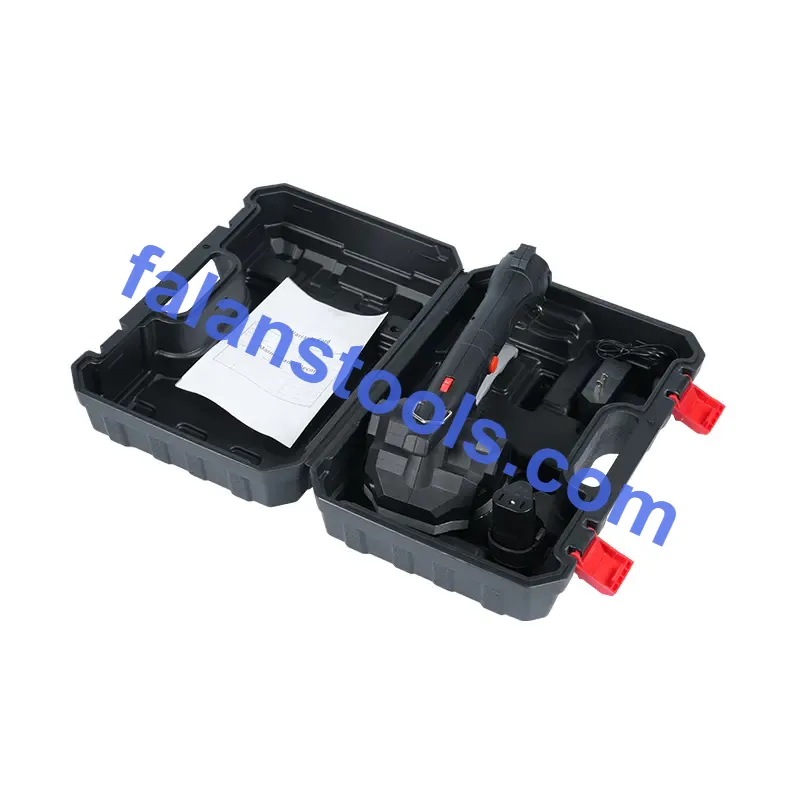
A large commercial flooring project stretches across hundreds or thousands of square meters. Each tile must find its position, settle into adhesive, and achieve proper leveling. Traditional methods rely on manual tapping with rubber mallets or pressing with straightedges, a slow process over vast areas. The critical question for general contractors and flooring specialists becomes: can a Tile Vibrating Paver reduce installation time for large commercial flooring projects? falanstools, operating under the FALANS brand and based in Yongkang, China, manufactures equipment specifically designed to accelerate this workflow while maintaining installation quality.
The time expenditure in traditional tile installation distributes across several activities. Adhesive application occupies a portion of the schedule. Tile placement requires focused attention. The settling phase, where each tile receives individual tapping or pressing to achieve full contact with the adhesive layer, often consumes the largest share of labor hours on large floors. A worker covering a hundred square meters might tap each tile dozens of times, moving across the surface in a slow, repetitive pattern. This physical action cannot accelerate significantly without risking inconsistent results or worker exhaustion. A mechanical vibration system changes this fundamental constraint by applying uniform, rapid compaction across the entire tile surface simultaneously.
The vibration mechanism transfers energy through the tile into the adhesive layer below. This action performs two functions within seconds. First, it settles the tile to a consistent depth, eliminating height variations between adjacent pieces. Second, it drives air bubbles out from under the tile, preventing hollow spots that compromise floor durability. A manual worker performing these actions with hand tools requires far longer per tile. The cumulative time difference across a large commercial space reaches hours or even days, depending on project scale. A contractor bidding against competitors can offer shorter completion schedules when equipped with vibration technology, a distinct advantage in commercial construction markets where time directly affects building occupancy and revenue generation.
The learning curve for vibration equipment affects initial job speed. A crew unfamiliar with a Tile Vibrating Paver may operate cautiously during the first few hours. However, the basic operation principle remains simple: place the paver on a laid tile, activate the vibration, and move to the next position after a few seconds. Unlike manual methods, where individual worker technique varies widely, vibration equipment produces consistent results regardless of operator experience level. A new crew member achieves similar output speed to a veteran after minimal training. This consistency proves valuable for large commercial projects requiring multiple installation teams working simultaneously across different floor sections.
Electric power configuration influences workflow continuity. Corded vibration pavers provide unlimited runtime but require access to power outlets across large spaces, potentially needing extension cables that create trip hazards. Cordless battery-powered units offer unrestricted movement but introduce charging downtime. Falanstools engineers their equipment with attention to both power options, allowing contractors to select configurations matching their typical project scale. A commercial flooring crew working on a multi-story office building benefits from battery swappable systems that maintain continuous operation while depleted packs recharge on a central cart. The time saved through vibration compaction should not be lost to power management inefficiencies.
The relationship between vibration frequency and adhesive curing behavior affects overall project scheduling. Thinset mortars and other tile adhesives have open time windows during which they accept tile placement and achieve proper bonding. A slow installation process risks the first-laid tiles exceeding this window while the last tiles receive placement, leading to adhesive that has skinned over and will not bond properly. Vibration equipment accelerates the entire installation sequence, compressing the time between first and last tile placement. This faster pace keeps all work within the adhesive's working window, reducing material waste from expired batches and eliminating the need for small, inefficient adhesive mixing cycles. A commercial project using vibration technology may use fewer mortar batches despite covering the same area, saving both material cost and mixing labor.
The physical demands of manual tile installation impose practical limits on daily output. A worker tapping tiles for eight hours experiences fatigue that reduces productivity during the afternoon hours. Repetitive stress injuries accumulate over weeks, potentially causing lost work days. A Tile Vibrating Paver transfers the physical effort from the worker to the machine. The operator simply guides the device across the finished tile surface, pressing a trigger or button to activate the vibration mechanism. Physical strain decreases substantially, allowing sustained output throughout full shifts and across consecutive work days. A crew that finishes a commercial floor in five days rather than seven using manual methods represents a forty percent time reduction, directly improving project profitability through reduced labor costs.
For contractors examining specific vibration equipment configurations, the product information available at https://www.falanstools.com/product/ceramic-tile-vibration-tiler/ details the frequency settings, power options, and weight specifications suitable for commercial use. A general contractor planning a large retail space or hospital corridor evaluates these specifications against their typical tile formats and adhesive requirements. The adjustable vibration intensity allows the same equipment to handle both thin mosaic tiles and thick porcelain planks without changing tools. This versatility reduces the number of specialized devices a commercial flooring crew must transport and maintain, further improving operational efficiency across multiple project types.
 Dutch
Dutch
 English
 Arabic
 French
 Spanish
 Portuguese
 Deutsch
 Turkish
 Italiano
 Russian
 Romaian
 Portuguese (Brazil)
 Greek
Greek