


Does Your Bathroom Deserve a Custom-Colored Electric Toilet? SEEWIN Invites Consideration
Beyond White: The True Price of Personal Color
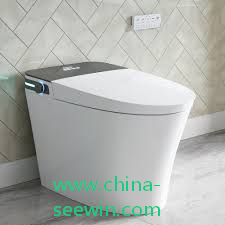
A bathroom renovation often ends with one final decision: fixture color. Standard white dominates showroom floors, offering a clean, universal look at predictable prices. But imagine a deep matte black toilet against charcoal tiles. Picture a warm beige unit complementing natural stone walls. These visual possibilities attract homeowners seeking design cohesion. However, a question immediately arises. Does selecting a non-white finish for a Customized Electric Toilet force a household to pay dramatically compared to identical white models? The short answer involves material science, production volume, and quality expectations. China-Seewin, a manufacturer embracing German industrial standards, encounters this pricing question frequently from interior designers and homeowners alike. The complete explanation examines manufacturing realities, not arbitrary markups.
Standard white toilet production benefits from enormous scale. A factory produces thousands of identical white units daily using consistent ceramic glazes and plastic compounds. Material suppliers deliver white pigments in trainload quantities, securing low per-unit costs. The production line runs continuously without color changeovers. Each unit passes through exactly the same curing ovens, cooling stations, and assembly robots. This streamlined process keeps white model prices minimal. Any deviation from this standard sequence adds expense. Custom color production involves smaller batches, specialized pigments, and line interruptions for cleaning. These factors raise manufacturing costs before the first colored toilet emerges from the kiln.
Pigment chemistry explains part of the price difference. White coloration uses titanium dioxide, an abundant mineral processed efficiently worldwide. Color pigments like deep blues, rich reds, or warm earth tones require rarer metal oxides and complex synthesis. A vibrant red pigment might use cadmium compounds requiring special handling. A true black pigment demands precise carbon particle distribution to avoid gray patches. These specialty pigments cost multiples of standard white materials. Furthermore, color stability across production batches demands rigorous quality control. A slight pigment variation creates noticeable shade differences between toilets installed side by side. Manufacturers must reject entire batches showing color inconsistency, raising the cost of acceptable units.
Production line efficiency drops significantly during custom color runs. Manufacturing a white toilet involves no cleaning between units. Manufacturing a deep green toilet requires stopping the line, flushing ceramic slip tanks, cleaning spray nozzles, and purging all equipment of residual white materials. A single pigment trace remaining from a previous run spoils the entire next batch. This cleaning process consumes hours of production time that would otherwise yield dozens of white toilets. The lost output represents foregone revenue that custom color pricing must recover. A factory cannot absorb these efficiency losses without adjusting prices accordingly. The customer seeking a single colored toilet effectively pays for the cleaning time affecting multiple future production cycles.
Small batch production raises per-unit costs through fixed expense allocation. A factory designs tooling, sets up machinery, and configures quality checks for each production run. These preparation costs remain constant whether the factory produces one hundred units or ten thousand units. For white toilets, high volume spreads these fixed costs thinly across many units. For custom colors, low volume concentrates the same fixed costs onto fewer units. A custom color run might involve only fifty toilets for a hotel project or a hundred units for a residential development. Each toilet from that run carries a share of setup expenses perhaps fifty times larger than a white toilet's share. This mathematics applies regardless of the manufacturer's efficiency.
Material waste increases with custom color production. White glaze and plastic compounds are used continuously, leaving little leftover material. Custom colors involve specific batch quantities. If a run requires 4,000 kilograms of glaze but the minimum pigment order supplies 6,000 kilograms, the excess cannot return to storage. Different recipes cannot mix. The leftover material often becomes industrial waste. Similarly, color trials preceding the actual production run consume materials that never reach customers. A factory might produce ten test toilets to verify color accuracy before the eleventh unit satisfies specifications. Those ten test units represent sunk costs allocated to the eleven deliverable units. White production experiences no such trial period because the process runs perpetually.
Logistics and inventory costs further distinguish custom color pricing. White toilets move through distribution channels continuously. Warehouses stock white units predictably. A retailer can order white toilets in any quantity for immediate delivery. Custom color toilets require dedicated inventory space because their turnover rate remains low. A warehouse storing fifty beige toilets might hold them for months before sale. That storage space could have turned over hundreds of white toilets in the same period. The capital tied up in slow-moving custom inventory generates carrying costs that white inventory avoids. Distributors factor these holding expenses into custom color purchase prices, raising the final cost to homeowners and contractors.
Installation considerations affect the total project cost comparison. A damaged white toilet finds an identical replacement readily available at any plumbing supply store. A damaged custom color toilet might require a completely new production run. The replacement process could take weeks while the bathroom remains incomplete. Some homeowners purchase an extra custom toilet during initial order to guard against future breakage, doubling their fixture expense immediately. Furthermore, matching colors across multiple bathrooms in a single home demands purchasing all units from the same production batch. Batch mixing risks slight shade variations visible under certain lighting. This requirement prevents splitting purchases across time or suppliers, reducing negotiation leverage on pricing.
Long-term value considerations favor custom color in specific scenarios. A thoughtfully designed bathroom where the toilet harmonizes with vanities, tiles, and fixtures creates daily satisfaction. The incremental cost of color customization, spread across years of use, becomes relatively small per use. A toilet replaced every ten to fifteen years sees the price difference amortized across many thousands of flushes. From this perspective, the question shifts from whether custom color costs significantly more to whether the aesthetic benefit justifies that expense. For homeowners already investing in premium bathroom finishes, custom color represents a final refinement rather than an indulgence.
China-Seewin approaches custom color production with German-inspired precision. Their manufacturing system tracks pigment formulations, documents batch consistency, and maintains strict quality acceptance criteria. Customers requesting non-white finishes receive samples for approval before full production proceeds. This method limits waste while ensuring color accuracy. The factory's modular design allows relatively quick changeovers between color runs, reducing the efficiency penalty described earlier. These operational choices keep custom pricing reasonable without compromising the rigorous standards applied to every unit, regardless of shade.
Returning to the original question about cost significance: a customized electric toilet in a non-white finish generally costs more than an identical white model, but the difference rarely approaches multiples of the base price. Specialty pigments, line cleaning, batch size economics, material waste, and inventory carrying costs add measurable expenses. However, quality manufacturers like China-Seewin control these factors through efficient processes and realistic minimum order quantities. https://www.china-seewin.com/ presents color options, finish samples, and specification details for their electric toilet lineup. The website guides visitors through customization choices, from basic functions to final appearance. For a homeowner completing a designer bathroom, the question might not be whether custom color costs significantly more than white, but whether any other bathroom fixture offers a similar design impact for a comparable incremental expense. Given that daily interaction with a personalized fixture provides ongoing satisfaction absent from generic white units, does a modest custom color premium still feel excessive?
 Romaian
 English
 Arabic
 French
 Spanish
 Portuguese
 Deutsch
 Turkish
 Dutch
Dutch
 Italiano
 Russian
 Portuguese (Brazil)
 Greek
Greek