


Why It’s So Hard to Leave a Toxic Relationship (Real Reasons)
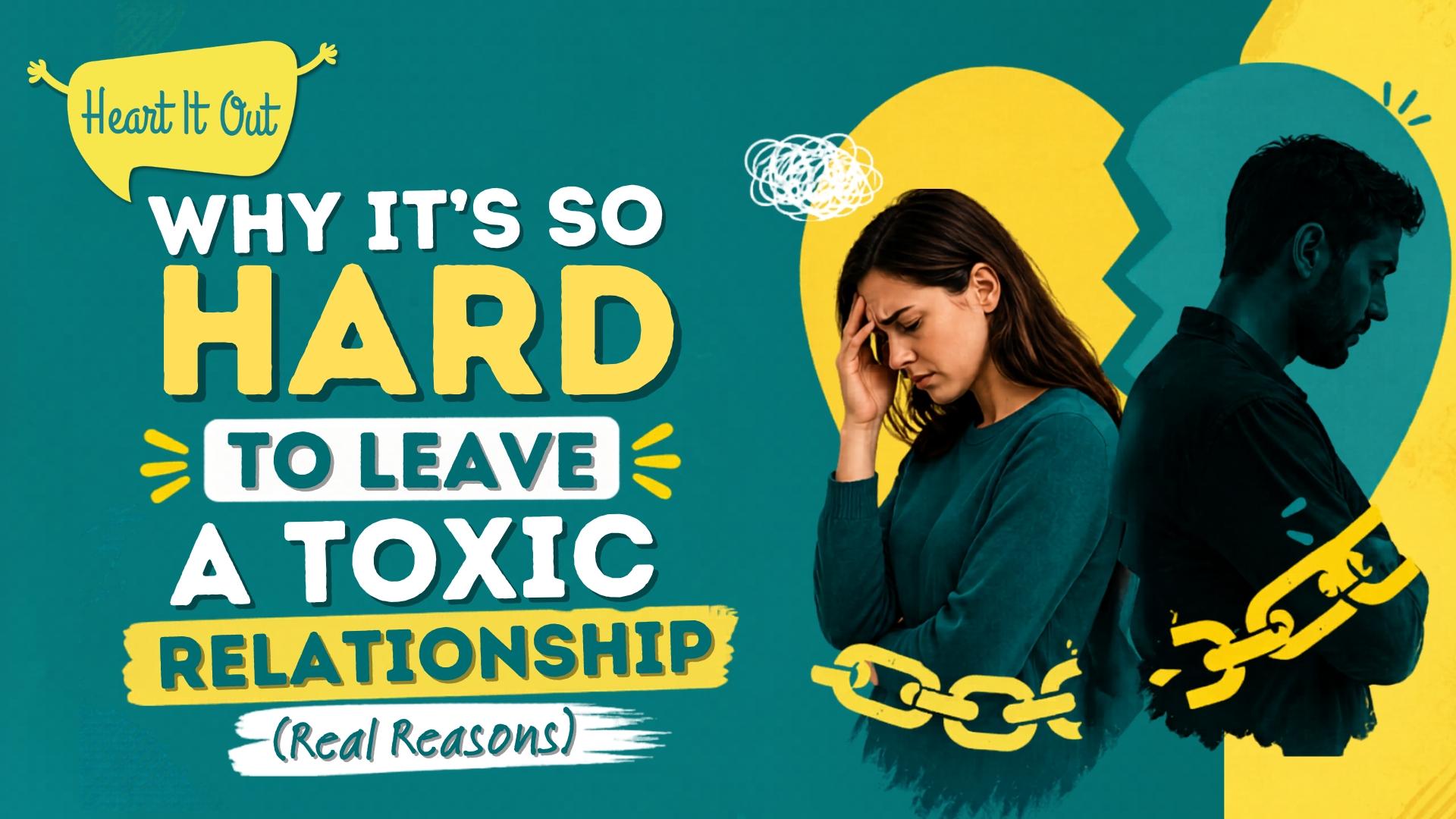
Leaving a toxic relationship isn’t just about “walking away.”
If it were that simple, more people would do it sooner.
The truth is — many people know something is wrong, yet still feel stuck. Confused. Even guilty for wanting to leave.
This guide breaks down the real psychological, emotional, and practical reasons why leaving feels so hard — in a clear, honest, and human way.
What Toxic Means in a Relationship (Beyond the Buzzword)
Before going deeper, it’s important to understand what toxic means in relationship dynamics.
A toxic relationship is not just about frequent arguments. It’s a pattern where:
-
You feel emotionally drained more than supported
-
Your self-worth slowly decreases
-
Communication feels unsafe or manipulated
-
Control, blame, or disrespect becomes normal
It’s not always obvious. Sometimes it looks like love — but feels like anxiety.
Why Leaving a Toxic Relationship Feels So Hard
1. Emotional Attachment Doesn’t Disappear Overnight
Even in unhealthy situations, feelings don’t switch off.
You may still:
-
Love the person
-
Miss the “good moments”
-
Hope things will go back to how they were
This emotional bond creates internal conflict — your mind sees the problem, but your heart resists letting go.
2. The “Hope Cycle” Keeps You Stuck
Many toxic relationships follow a pattern:
-
Conflict or hurt
-
Apology or temporary change
-
Emotional closeness again
This cycle creates false hope.
You start believing:
“Maybe this time it will be different.”
Over time, this hope becomes stronger than reality.
3. Fear of Being Alone
One of the biggest silent reasons.
You might think:
-
“What if I don’t find someone better?”
-
“What if I regret leaving?”
-
“At least this is familiar.”
The fear of loneliness can feel more overwhelming than the pain of staying.
4. Loss of Self-Confidence
Toxic environments slowly affect how you see yourself.
You may begin to:
-
Doubt your decisions
-
Feel like you’re “too sensitive”
-
Believe you can’t manage life alone
This makes leaving feel risky — even when it’s necessary.
5. Trauma Bonding (Strong Emotional Dependency)
In many toxic relationships, emotional highs and lows create a deep attachment.
You feel:
-
Addicted to the connection
-
Emotionally dependent on the person
-
Unable to imagine life without them
This is not weakness — it’s a psychological response.
6. Family Influence or Toxic Family Patterns
If someone grew up in a toxic family, unhealthy behaviors can feel “normal.”
You might:
-
Tolerate disrespect because it feels familiar
-
Struggle to recognize healthy love
-
Feel guilty setting boundaries
Past experiences often shape present choices more than we realize.
7. Practical Barriers (Real-Life Challenges)
Sometimes, it’s not just emotional.
People stay because of:
-
Financial dependence
-
Shared responsibilities
-
Social pressure
-
Fear of judgment
Leaving isn’t just emotional — it can feel like starting life from zero.
8. Guilt and Responsibility
You may feel responsible for:
-
Fixing the relationship
-
Supporting the other person
-
Not “giving up too soon”
This guilt can trap you in a cycle where you prioritize their needs over your own well-being.
Signs You’re Ready to Leave (Even If It Feels Hard)
You don’t need to feel “100% sure” to leave.
But you might be ready if:
-
You feel more anxious than happy in the relationship
-
You keep questioning your self-worth
-
You’ve tried to fix things repeatedly without real change
-
You feel emotionally exhausted most of the time
These are not small signals — they’re important.
What Actually Helps You Break Free
Leaving a toxic relationship is not just a decision — it’s a process.
Here’s what can genuinely help:
✔ Gain Clarity (Not Just Emotion)
Write down:
-
What hurts you
-
What you’ve tolerated
-
What hasn’t changed
Clarity reduces confusion.
✔ Build Emotional Support
Talk to:
-
Trusted friends
-
Family members
-
A therapist for toxic relationships
External perspective helps you see things more clearly.
✔ Consider Professional Help
Sometimes, the situation needs structured support:
-
Counseling for toxic relationships can help you understand patterns
-
Couples therapy for toxic relationships can clarify if change is possible
-
If you’re in India, many people explore options like couples therapy Bangalore for guided support
The goal is not to “save” the relationship at any cost — but to understand what’s healthy.
✔ Rebuild Your Self-Identity
Start small:
-
Make independent decisions
-
Reconnect with hobbies
-
Spend time alone without fear
You’re not “losing” something — you’re rebuilding yourself.
✔ Accept That It Will Feel Hard (At First)
Leaving doesn’t instantly feel like relief.
You may feel:
-
Sad
-
Confused
-
Lonely
But these feelings are temporary — staying stuck is not.
A Truth Most People Don’t Talk About
Leaving a toxic relationship doesn’t mean you didn’t love them.
It means:
You’re finally choosing yourself too.
That’s not selfish — it’s necessary.
Final Thoughts
A toxic relationship doesn’t always look extreme from the outside — but it deeply affects how you feel inside.
If leaving feels difficult, it doesn’t mean you’re weak.
It means you’re human — navigating emotions, history, and uncertainty all at once.
After exploring this deeply, one thing becomes clear:
having the right guidance can make a huge difference.
Many people today quietly turn to platforms like Heart It Out after struggling alone for a long time — not because they want quick fixes, but because they’re looking for real understanding, structured support, and safe conversations around relationships.
Sometimes, clarity doesn’t come from thinking more —
it comes from talking to the right people.
And that step, however small, can change everything.
FAQs
1. Why do people stay in a toxic relationship even when they know it’s harmful?
Because emotions, fear, attachment, and hope are stronger than logic. It’s not about intelligence — it’s about human psychology.
2. Can a toxic relationship become healthy?
In some cases, yes — but only if both people are willing to take responsibility and seek help like counseling for toxic relationships or structured therapy.
3. Is it normal to miss someone after leaving a toxic relationship?
Yes. Missing someone doesn’t mean the relationship was right — it just means you were emotionally connected.
4. How do I know if I need therapy for my relationship?
If you feel confused, stuck, or emotionally drained, speaking to a therapist for toxic relationships can help you gain clarity and direction.
5. Does growing up in a toxic family affect relationships?
Yes. A toxic family environment can influence how you perceive love, boundaries, and self-worth in adult relationships.

 English
 Arabic
 French
 Spanish
 Portuguese
 Deutsch
 Dutch
Dutch
 Italiano
 Russian
 Romaian
 Portuguese (Brazil)
 Greek
Greek