In modern power transmission and distribution projects, selecting the right conductor directly affects line efficiency, installation cost, and long-term grid reliability. For utilities, EPC contractors, and procurement teams, AAC cable remains one of the most practical solutions for short-span overhead distribution networks where high conductivity and cost efficiency are top priorities.
As a global manufacturer of overhead conductors and power cable solutions, HNBF Power delivers high-performance AAC conductors engineered for utility-grade performance, consistent quality, and dependable field service life. From urban distribution lines to industrial power networks, AAC cable continues to solve key project pain points such as voltage loss, corrosion exposure, and installation simplicity.
In this guide, we’ll explore how AAC cable works, where it performs best, and how buyers can choose the right specification for reliable power infrastructure.
What Is AAC Cable?
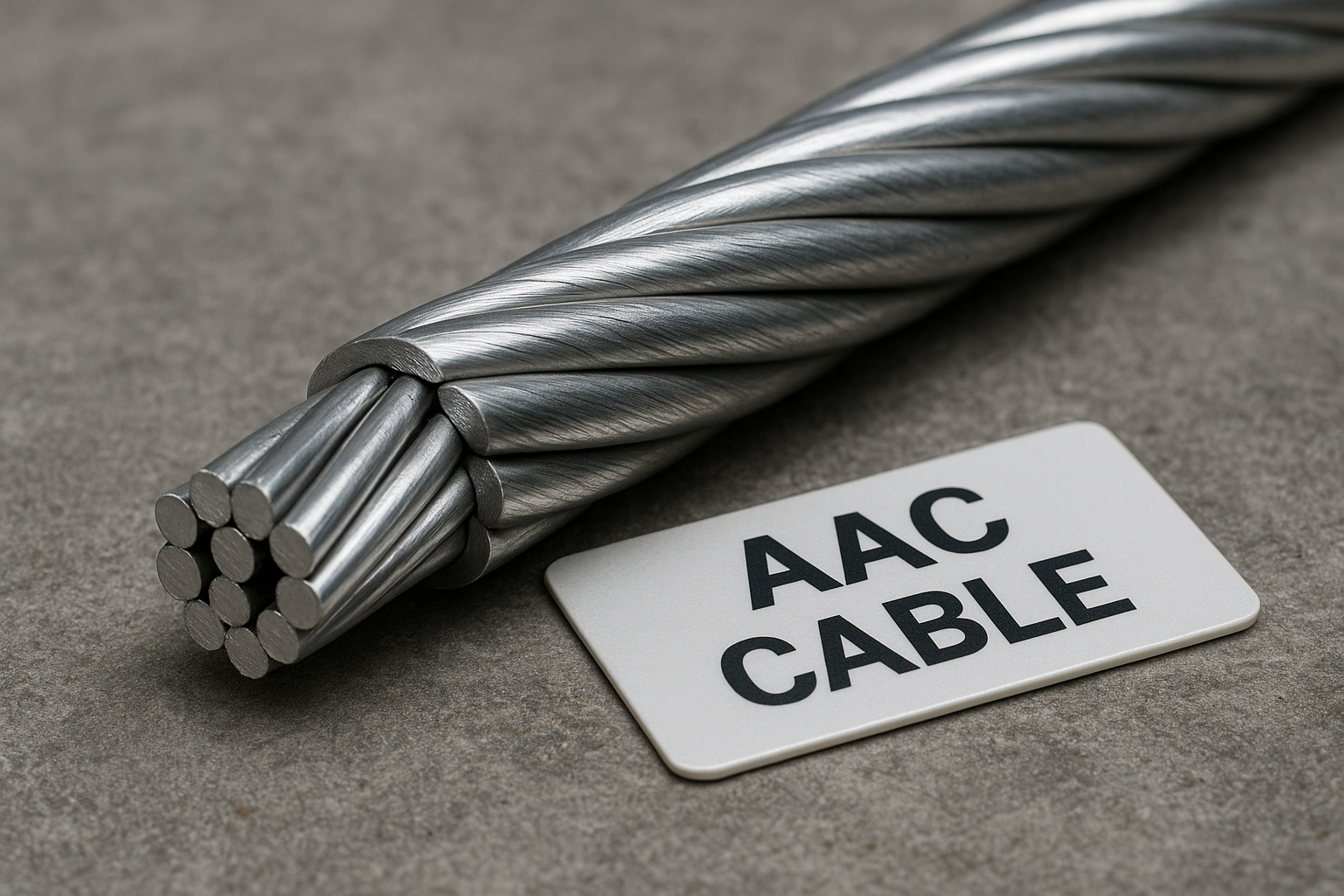
AAC cable (All Aluminum Conductor) is an overhead bare conductor made from concentrically stranded hard-drawn aluminum wires. It is widely used in low, medium, and high-voltage overhead transmission and distribution systems, especially where high electrical conductivity and lightweight construction are required.
Unlike composite conductors such as ACSR, AAC uses 100% aluminum strands, making it an excellent option for:
- Urban overhead distribution lines
- Short-span substations
- Coastal and humid environments
- Busbar jumpers
- Industrial overhead feeder lines
- Temporary or permanent utility expansion projects
Its high conductivity helps reduce transmission losses, while the simple stranded structure supports faster installation and easier handling in the field.
Why Utilities and EPC Buyers Prefer AAC Cable
For engineers and procurement managers, the decision often comes down to electrical efficiency, total project cost, and environmental durability.
1) High Electrical Conductivity
AAC conductors offer excellent conductivity because they are made entirely from aluminum. This makes them ideal for applications where current carrying capacity is more critical than tensile strength.
The result is:
- Better energy efficiency
- Lower resistive losses
- Improved voltage regulation
- Reduced operational cost over time
2) Lightweight and Easy Installation
Compared with heavier conductor alternatives, AAC cable is easier to transport, lift, and string during overhead line construction.
This directly solves common project pain points:
- Reduced labor intensity
- Faster tower-to-tower installation
- Lower equipment handling costs
- Improved project completion timelines
3) Strong Corrosion Resistance
In coastal, humid, and industrial pollution zones, corrosion resistance is a major concern. AAC’s aluminum construction provides excellent resistance against atmospheric corrosion, helping utilities improve service life in harsh environments.
Best Applications for AAC Cable
While AAC is highly efficient, it performs best in specific use cases.
Urban Distribution Networks
AAC cable is commonly used in densely populated city grids, where shorter spans and frequent support structures reduce the need for high tensile strength.
Coastal Utility Projects
Because of its corrosion resistance, AAC is often selected for:
- Seaside towns
- Port electrification
- Island distribution systems
- Chemical industrial zones
Substation and Bus Connections
Its flexibility and conductivity make it suitable for jumper connections and busbar links where electrical performance is the main design factor.
Renewable Energy Collection Lines
Solar and wind farm auxiliary overhead distribution systems often use AAC for short-distance power evacuation and internal plant distribution.
Common Buyer Pain Points When Choosing AAC Cable
Procurement teams often face specification challenges that can impact both performance and cost.
Incorrect Conductor Sizing
One of the most common issues is selecting the wrong conductor cross-section. Oversizing increases material cost, while undersizing can lead to overheating and voltage drop.
Solution:
HNBF Power supports buyers with custom conductor sizing based on current load, span length, ambient temperature, and installation environment, ensuring optimal cost-performance balance.
Quality Consistency Across Large Orders
For utility tenders and EPC projects, inconsistency in strand diameter, tensile performance, or resistance values can delay inspections and site approvals.
Solution:
HNBF Power applies strict manufacturing control and international testing standards to ensure every batch meets technical procurement requirements.
Environmental Durability Concerns
Projects in humid, saline, or polluted areas often require conductors that maintain conductivity without accelerated degradation.
Solution:
HNBF Power manufactures AAC conductors with premium-grade aluminum rod materials to improve corrosion resistance and long-term operational stability.
How HNBF Power Adds Value to Utility Projects
Choosing the right supplier is just as important as choosing the right conductor.
HNBF Power helps utilities, distributors, and EPC contractors reduce risk through:
Customized Technical Specifications
Available in multiple standard and custom constructions for:
- IEC standards
- ASTM standards
- BS standards
- DIN standards
- Utility-specific tender requirements
Large-Scale Global Supply Capability
For large infrastructure rollouts, supply continuity matters. HNBF Power supports:
- Bulk utility orders
- Fast export logistics
- Project-based production planning
- OEM and private label supply
Engineering-Focused Technical Support
The HNBF Power team works closely with engineers and buyers to recommend the right conductor based on:
- Span design
- Current load
- Climate conditions
- Mechanical requirements
- Budget optimization
This helps reduce procurement errors and improves project lifecycle performance.
Why AAC Cable Remains a Cost-Effective Grid Solution
Even as advanced conductor technologies grow, AAC cable continues to be one of the most economical solutions for short-span overhead distribution systems.
Its main advantages include:
- Excellent conductivity
- Lightweight handling
- Strong corrosion resistance
- Competitive material cost
- Reliable performance in urban networks
- Easy maintenance and replacement
For utilities seeking efficient and scalable overhead conductor solutions, AAC remains a proven investment.
FAQs About AAC Cable
What does AAC cable stand for?
AAC stands for All Aluminum Conductor, a stranded bare overhead conductor made entirely of aluminum wires.
Where is AAC cable commonly used?
It is mainly used in urban power distribution, substations, coastal networks, and short-span overhead lines.
Is AAC better than ACSR?
AAC offers better conductivity and corrosion resistance, while ACSR provides higher tensile strength for long-span transmission lines.
Can AAC cable be customized?
Yes. HNBF Power offers custom sizes, strand constructions, and standard compliance options based on project requirements.
Is AAC suitable for coastal environments?
Yes, AAC is highly suitable for coastal and humid regions due to its excellent corrosion resistance.
Partner with HNBF Power for Customized AAC Cable Solutions
Whether you are planning an urban distribution upgrade, coastal grid expansion, or industrial overhead feeder project, the right AAC cable specification can improve efficiency, reduce losses, and lower lifecycle cost.
Contact HNBF Power today for customized AAC cable solutions, technical support, and bulk supply tailored to your utility or EPC project requirements.


 Romaian
 English
 Arabic
 French
 Spanish
 Portuguese
 Deutsch
 Turkish
 Dutch
Dutch
 Italiano
 Russian
 Portuguese (Brazil)
 Greek
Greek