In today’s rapidly evolving energy landscape, utilities, EPC contractors, and industrial buyers are constantly seeking reliable, cost-efficient, and high-performance conductors. Aluminum cable has emerged as a preferred choice across power transmission and distribution projects due to its excellent balance of conductivity, weight, and cost.
For engineers and procurement teams, selecting the right conductor is not just about price it’s about long-term performance, installation efficiency, and system reliability. In this guide, we’ll explore why aluminum cable is a strategic investment and how HNBF Power delivers tailored solutions to meet diverse project requirements.
What Is Aluminum Cable?
Aluminum cable refers to electrical conductors made primarily from aluminum or aluminum alloys, widely used in overhead transmission lines, distribution networks, and industrial power systems. Compared to copper, aluminum offers a lighter and more economical alternative without compromising significantly on performance.
Common types of aluminum-based cables include:
-
AAC (All Aluminum Conductor)
-
AAAC (All Aluminum Alloy Conductor)
-
ACSR (Aluminum Conductor Steel Reinforced)
-
ABC (Aerial Bundled Cable)
-
LV Power Cables and Concentric Cables
Each type is engineered for specific applications, environmental conditions, and load requirements.
Why Aluminum Cable Is Widely Preferred
1. Cost Efficiency for Large-Scale Projects
One of the biggest advantages of aluminum cable is its lower material cost compared to copper. For large transmission and distribution projects, this translates into substantial savings without sacrificing system performance.
2. Lightweight and Easy Installation
Aluminum is approximately one-third the weight of copper. This significantly reduces:
For EPC contractors, this means faster project execution and reduced labor expenses.
3. Excellent Conductivity-to-Weight Ratio
While aluminum has lower conductivity than copper, its conductivity per unit weight is highly efficient. This makes it ideal for overhead transmission lines where weight plays a critical role.
4. Corrosion Resistance
Aluminum naturally forms an oxide layer that protects it from corrosion. This makes aluminum cable suitable for:
-
Coastal regions
-
Industrial environments
-
High-humidity areas
5. Scalability for Grid Expansion
As power grids expand to accommodate renewable energy and urban growth, aluminum cables offer a scalable and cost-effective solution for extending transmission networks.
Key Applications of Aluminum Cable
Overhead Transmission Lines
ACSR and AAAC conductors are widely used in high-voltage transmission lines due to their strength and durability. Steel reinforcement in ACSR enhances tensile strength for long-span installations.
Urban Distribution Networks
ABC cables are increasingly used in urban and semi-urban areas for safer and more reliable electricity distribution, reducing power theft and outages.
Industrial Power Systems
Low-voltage aluminum cables are commonly used in factories, warehouses, and infrastructure projects where cost and efficiency are critical.
Renewable Energy Projects
Solar farms and wind power installations rely on aluminum cables for efficient energy transfer over long distances.
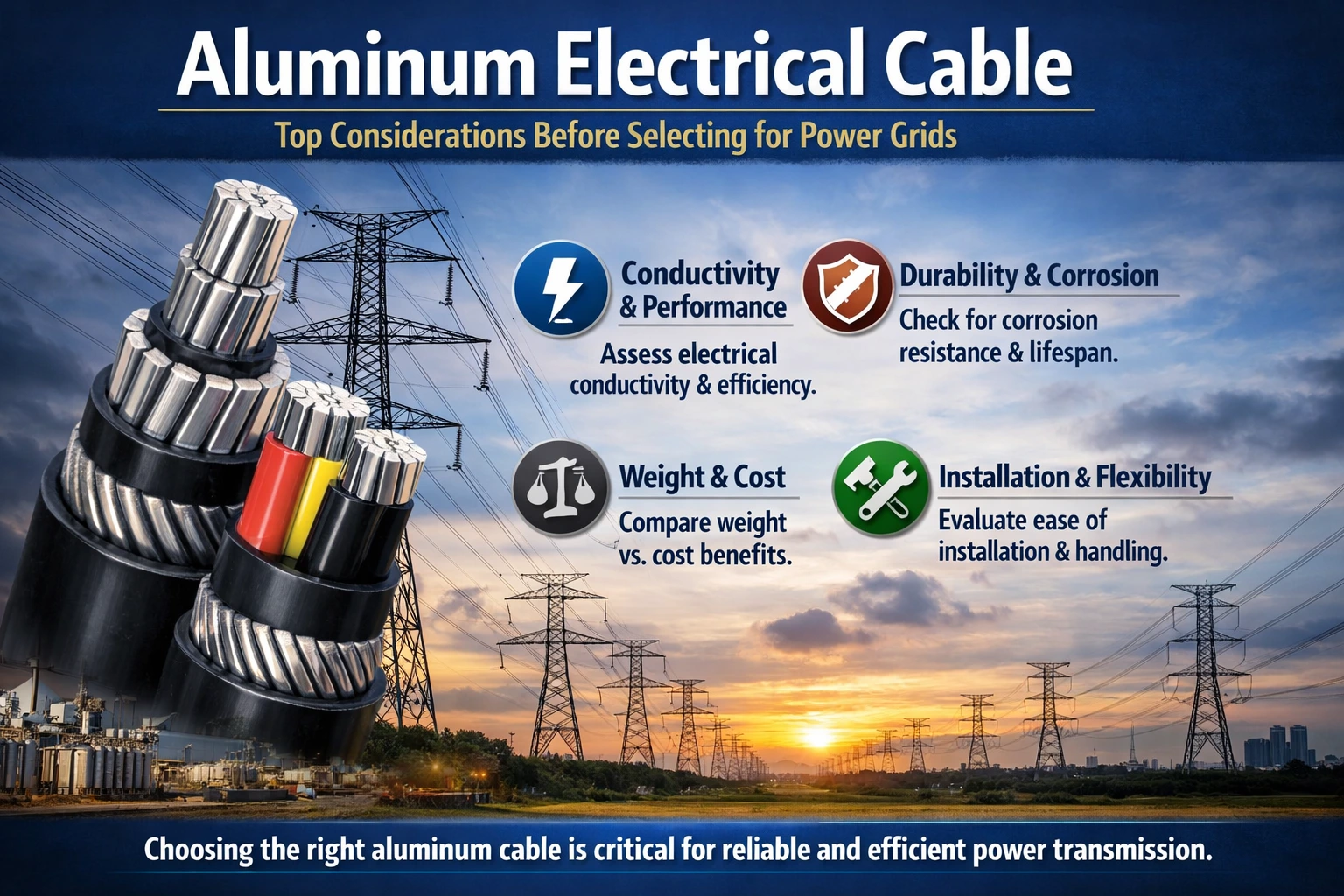
Choosing the Right Aluminum Cable
Selecting the right aluminum cable involves more than just picking a product off the shelf. Engineers and procurement managers must evaluate:
Load Requirements
Determine the current-carrying capacity needed for your application to avoid overheating and energy losses.
Environmental Conditions
Consider factors such as temperature, humidity, wind load, and corrosion risks when choosing conductor types.
Mechanical Strength
For overhead lines, tensile strength is critical. ACSR is often preferred for long spans and high mechanical stress environments.
Compliance and Standards
Ensure that cables meet international standards such as IEC, ASTM, or BS to guarantee safety and performance.
Common Challenges and How to Overcome Them
Concern: Lower Conductivity Than Copper
Solution: Increase conductor cross-sectional area to achieve the required conductivity while still benefiting from lower cost and weight.
Concern: Connection and Jointing Issues
Solution: Use proper connectors and installation techniques designed specifically for aluminum conductors to ensure reliable connections.
Concern: Thermal Expansion
Solution: Proper design and installation planning can mitigate expansion-related issues, especially in overhead systems.
Why Choose HNBF Power for Aluminum Cable Solutions?
HNBF Power stands out as a trusted global manufacturer specializing in overhead conductors and power cables. With a strong focus on utility-grade performance and engineering precision, the company delivers solutions tailored to real-world challenges.
What Sets HNBF Power Apart?
-
Comprehensive Product Range: From AAC and AAAC to ACSR and ABC cables, covering transmission and distribution needs
-
Customization Capabilities: Tailored conductor designs based on project specifications and environmental conditions
-
Strict Quality Control: Compliance with international standards ensures long-term reliability
-
Global Supply Expertise: Experience supporting utilities, EPC contractors, and infrastructure developers worldwide
Whether you are upgrading an existing grid or developing a new power infrastructure project, HNBF Power provides dependable aluminum cable solutions that align with your technical and commercial goals.
Future Trends in Aluminum Cable Usage
The demand for aluminum cable is expected to grow as power systems evolve. Key trends include:
-
Increased adoption in renewable energy transmission
-
Smart grid integration requiring efficient conductors
-
Expansion of urban distribution networks using ABC systems
-
Greater emphasis on cost optimization in large-scale infrastructure projects
For procurement teams, staying ahead means partnering with manufacturers who understand these evolving demands.
FAQs
1. Is aluminum cable safe for power transmission?
Yes, aluminum cable is widely used in power transmission and distribution systems and meets international safety standards when properly installed.
2. How does aluminum cable compare to copper cable?
Aluminum is lighter and more cost-effective, while copper has higher conductivity. However, aluminum is often preferred for large-scale projects due to its overall efficiency.
3. What type of aluminum cable is best for overhead lines?
ACSR and AAAC are commonly used for overhead transmission due to their strength and durability.
4. Can aluminum cable be used in industrial applications?
Yes, aluminum cables are widely used in industrial environments for power distribution and equipment connections.
5. How do I choose the right aluminum cable for my project?
You should consider load capacity, environmental conditions, mechanical strength, and compliance standards. Consulting with an experienced manufacturer is highly recommended.
Get Customized Aluminum Cable Solutions Today
Choosing the right aluminum cable is critical to the success of your power project. With the right partner, you can ensure optimal performance, cost efficiency, and long-term reliability.
Contact HNBF Power today to discuss your project requirements and get customized aluminum cable solutions designed to meet your exact technical and commercial needs.


 Romaian
 English
 Arabic
 French
 Spanish
 Portuguese
 Deutsch
 Turkish
 Dutch
Dutch
 Italiano
 Russian
 Portuguese (Brazil)
 Greek
Greek