


Stop Losing B2B Clients: The Ultimate Micro Display Fix
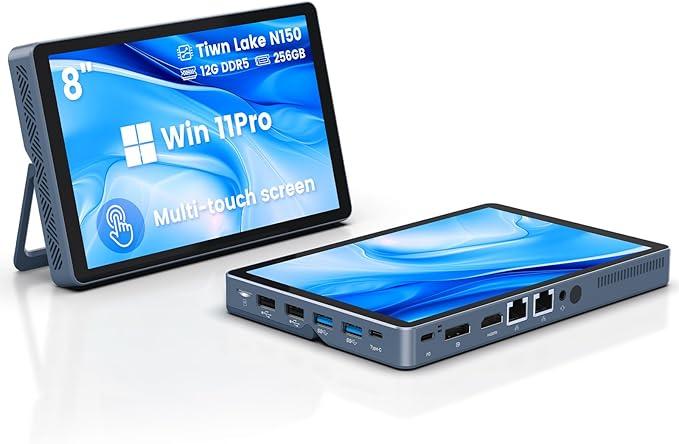
The global push for miniaturization in wearable technology, medical diagnostics, and industrial AR has placed the micro display at the center of the hardware revolution. However, for B2B manufacturers and product designers, the transition from prototype to a market-ready device is often stalled by a recurring set of technical hurdles. While the promise of high-resolution visuals in a tiny form factor is enticing, the reality frequently involves thermal throttling, pixel degradation, and integration bottlenecks that can jeopardize a multi-million dollar product line. To stay competitive in 2026, businesses must move beyond basic component sourcing and adopt a solution-oriented integration strategy that addresses these core pain points.
The Problem: Why Standard Micro Displays Fail in the Field
In the B2B sector, "good enough" is rarely sufficient. A common issue faced by engineers is the "Thermal Barrier." As micro display units—whether based on OLED, Micro-LED, or LCoS technology—strive for higher brightness levels to ensure outdoor readability, they generate significant heat. In a compact housing like a surgical headset or a thermal imaging monocular, this heat has nowhere to go.
The result is a cascading failure: the organic materials in the display degrade, the refresh rate drops to prevent melting, and the battery life plummets. For a business, this leads to high return rates, damaged brand reputation, and lost contracts. Furthermore, many off-the-shelf displays suffer from "Screen Door Effect" (SDE) and low contrast ratios, which, in a medical or tactical environment, isn't just a nuisance—it’s a safety risk.
The Solution: A Triple-Threat Integration Strategy
To solve these challenges and provide a feasible path forward for product managers, we recommend a three-pillar optimization approach:
-
Thermal Conductive Backplane Adoption: Instead of relying on traditional passive cooling, high-performance B2B applications should utilize Silicon-on-Insulator (SOI) backplanes. These substrates act as a heat sink, distributing thermal energy across the entire surface of the display module. This allows for sustained high-brightness operation without the risk of pixel burn-in or hardware throttling.
-
Hybrid Driving Circuits: Power consumption is often the "silent killer" of micro-display-based products. By implementing hybrid driving architectures that combine digital and analog signals, manufacturers can reduce power draw by up to 30%. This is particularly vital for industrial "always-on" HUDs (Heads-Up Displays) where battery swap-outs lead to costly downtime.
-
Active Matrix Micro-LED (AM-µLED) Transition: For environments requiring extreme durability and sunlight legibility, shifting from OLED to Micro-LED is the most feasible long-term solution. Micro-LEDs offer inorganic stability, meaning they don't suffer from the same decay as organic counterparts, providing a product lifespan that meets industrial and military-grade requirements.
Conclusion
Solving the micro display paradox requires a shift in perspective. It is no longer about finding the smallest screen; it is about finding the most resilient system. By prioritizing thermal management, power efficiency, and rigorous industry certifications, B2B companies can overcome the technical barriers that ground so many projects.
As the industry moves toward more sophisticated AR and VR applications, the businesses that succeed will be those that view the display not as a standalone component, but as the heart of a complex, high-performance ecosystem. Implementing the solutions outlined above ensures that your product is not only market-ready but market-leading, providing the reliability and value that today's B2B landscape demands.

 Arabic
 French
 Spanish
 Portuguese
 Deutsch
 Turkish
 Dutch
Dutch
 Italiano
 Russian
 Romaian
 Portuguese (Brazil)
 Greek
Greek